Analysis & Interpretation
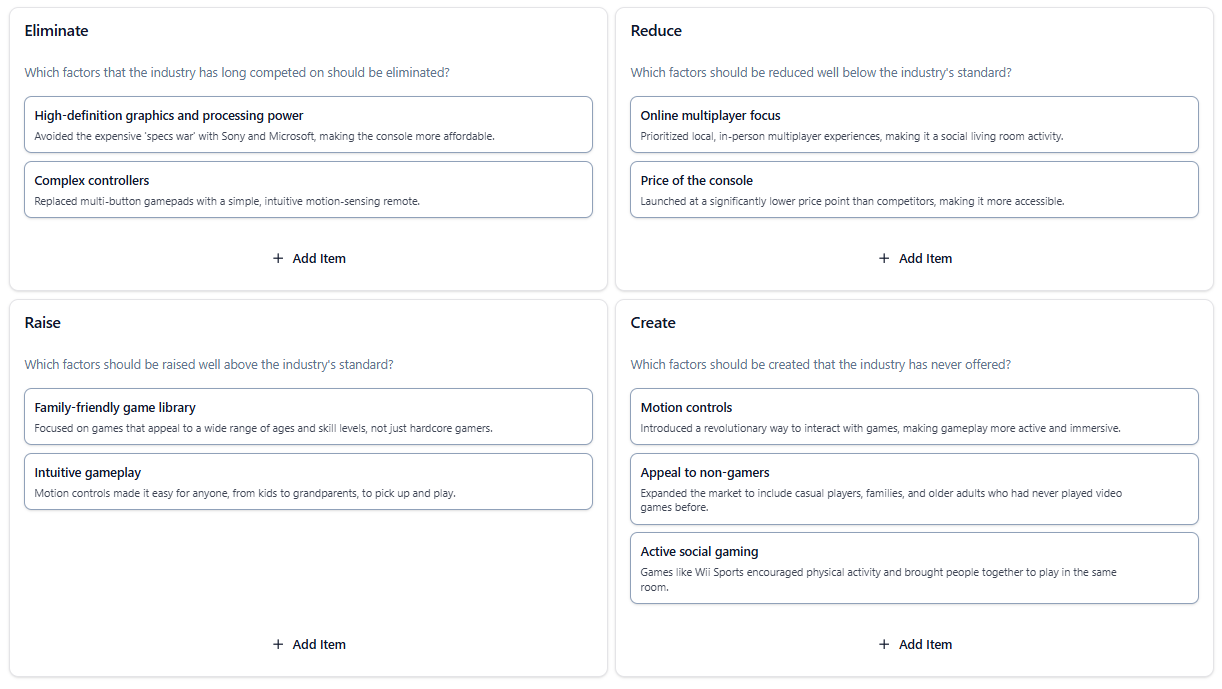
This Blue Ocean Strategy Canvas explores how the Nintendo Wii reshaped the gaming industry by diverging from the traditional competitive focus on high-end graphics and power. Instead of joining the “specs war,” Nintendo created an entirely new entertainment experience centered on motion, accessibility, and family-friendly interaction. This strategic shift opened a vast, uncontested market that attracted non-gamers, casual players, and households that had never purchased a game console before.
Eliminating Industry Norms Reduced Cost and Complexity: By removing high-definition hardware requirements and abandoning complex controllers, Nintendo avoided expensive engineering battles and made the console approachable for everyone.
Reducing Less Essential Features Shifted the Gaming Experience: Deprioritizing online multiplayer and lowering the console price placed emphasis on affordability and social, in-person play—something competitors largely overlooked.
Raising Accessibility and Family Appeal Expanded the Audience: A broad game library suitable for all ages, combined with intuitive gameplay, transformed gaming into an inclusive activity rather than a niche pastime.
Creating New Interaction Models Defined the Blue Ocean: Motion controls, active social gaming, and experiences designed for non-gamers introduced entirely new categories of play that competitors had never targeted.
Nintendo succeeded by redefining what a game console could be. Instead of competing on technical superiority, the Wii created a blue ocean by appealing to families, casual gamers, and brand-new demographics. Motion-based interaction, affordability, and easy-to-learn gameplay created a fun, social, and highly accessible gaming experience that set the Wii apart from the traditional console market.