Analysis & Interpretation
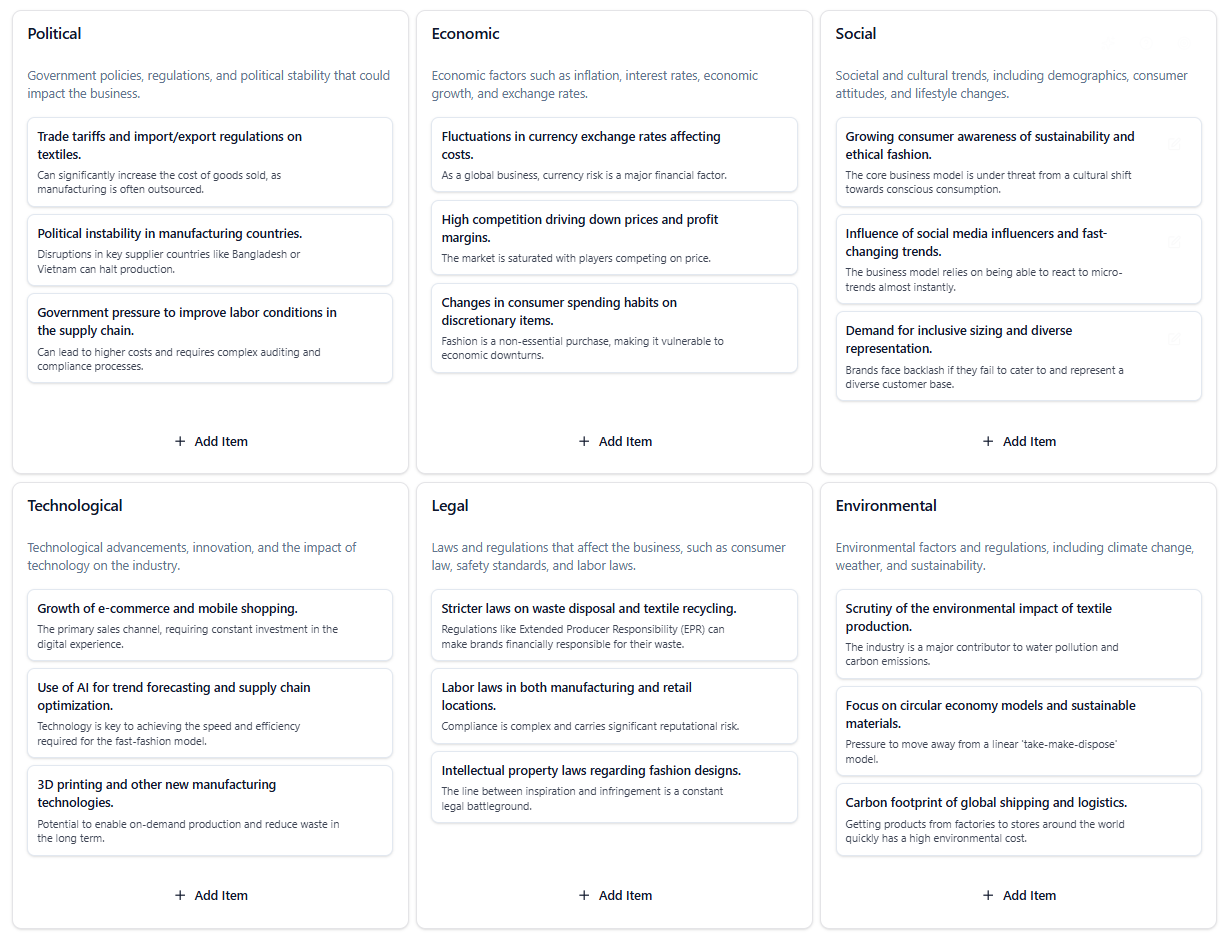
This PESTLE analysis explores the external forces shaping the fast fashion industry, where speed, affordability, and ethics often collide. It highlights how regulatory changes, economic pressures, and growing social awareness are redefining how brands design, produce, and distribute fashion globally.
- Political Risks in Global Supply Chains: Trade tariffs, labor scrutiny, and political instability in supplier nations create operational uncertainty. Building diversified sourcing networks and transparent compliance systems can mitigate these risks.
- Economic Pressures on Margins: Currency fluctuations and fierce price competition reduce profitability. Lean production, localized fulfillment, and flexible pricing strategies are key to sustaining market share.
- Cultural Shift Toward Conscious Fashion: Rising awareness of sustainability and inclusivity is reshaping consumer expectations. Brands that align with ethical practices and diversity values gain long-term credibility.
- Technology as a Competitive Catalyst: AI-driven forecasting, 3D design, and digital retail platforms enable speed, precision, and personalization—turning data into a core strategic asset.
- Legal and Environmental Accountability: Stricter waste and labor regulations are forcing greater responsibility. Moving toward circular models, recycling systems, and carbon-efficient logistics can future-proof the business.
The fast fashion retailer’s future depends on balancing agility with accountability. By leveraging technology, improving supply chain ethics, and investing in sustainable materials, the brand can evolve from volume-based growth to purpose-driven profitability.