


Social Impact & Non-Profit Sector
A Non-Profit Environmental Organization
A look at how a mission-driven organization aligns its strategy, skills, and shared values to advance environmental protection and community impact.
Analysis & Interpretation
Background
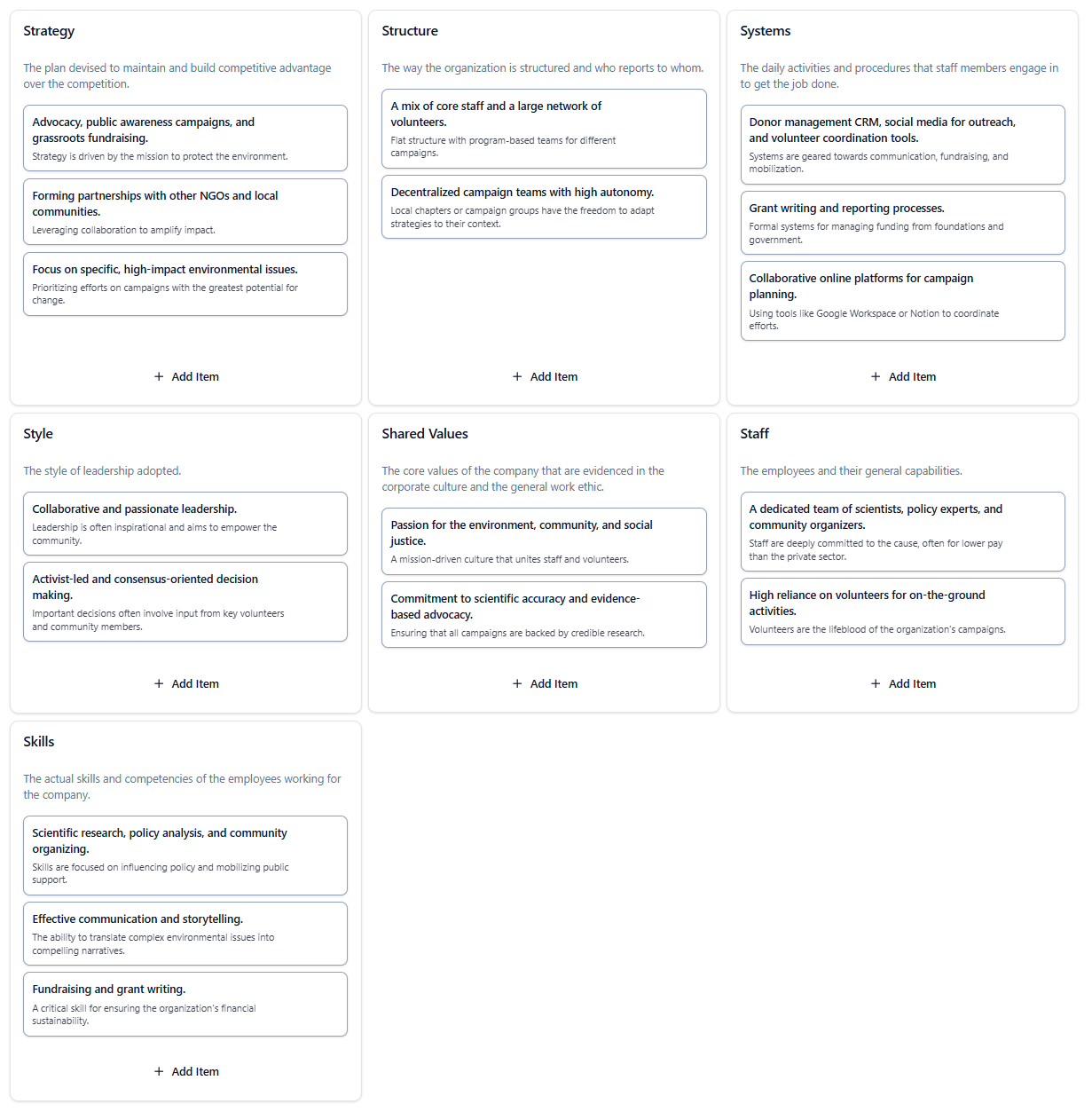
This McKinsey 7S Model examines how a non-profit environmental organization aligns its strategy, structure, systems, and culture to drive advocacy, mobilize volunteers, and influence environmental policy. By analyzing the seven organizational elements—Strategy, Structure, Systems, Style, Shared Values, Staff, and Skills—the model highlights how mission-driven work, community engagement, and scientific credibility shape the organization’s effectiveness.
Key Strategic Insights
Strategy Focused on Advocacy and High-Impact Issues: The organization prioritizes public awareness campaigns, partnerships with NGOs and communities, and targeted initiatives that address the most urgent environmental challenges.
Structure Designed for Flexibility and Community Reach: A combination of core staff and a broad volunteer network supports a flat, program-based structure, with decentralized teams empowered to tailor campaigns to local needs.
Systems Built for Outreach, Funding, and Coordination: Donor management software, social media, grant processes, and collaborative platforms help the organization communicate effectively, secure funding, and coordinate decentralized teams.
Leadership Style That Inspires and Empowers: Collaborative, activist-led leadership emphasizes inclusivity, encouraging input from volunteers and community members while driving passion and engagement.
Shared Values Anchored in Environmental Stewardship: A collective commitment to environmental protection, social justice, and scientific accuracy guides all decisions and unifies the organization’s culture.
Staff Committed to Mission-Driven Work: Scientists, policy experts, and organizers form the organizational core, supported by volunteers who play critical roles in campaign execution and community mobilization.
Skills Focused on Advocacy and Public Mobilization: Expertise in research, policy, community organizing, storytelling, and fundraising enables the organization to influence policy, inspire action, and maintain financial sustainability.
Strategic Summary
This environmental non-profit thrives through mission alignment, grassroots engagement, and evidence-based advocacy. While decentralized and volunteer-driven structures enable flexibility and reach, success depends on maintaining strong communication, scientific credibility, and effective fundraising systems. Continued investment in digital coordination tools, volunteer training, and partnership-building will strengthen long-term impact.
How This Canvas Was Built
This example shows how organizational frameworks reveal the internal dynamics that help mission-driven organizations scale their influence.

AI-Assisted Organizational Breakdown
The system evaluated each of the seven S’s to illustrate how strategy, values, and skills converge to support environmental advocacy.

Collaborative Structure Mapping
The visual canvas highlights how decentralized teams and volunteer networks interact with core staff to deliver coordinated, high-impact campaigns.

Alignment and Mission Consistency Review
A final evaluation confirmed strong cohesion across the seven elements, especially around shared values of environmental protection and evidence-based action.
Strengthen Your Organizational Impact
Import this McKinsey 7S Model canvas to refine campaign planning, align team structures, or evaluate your own organization’s operational coherence.