Analysis & Interpretation
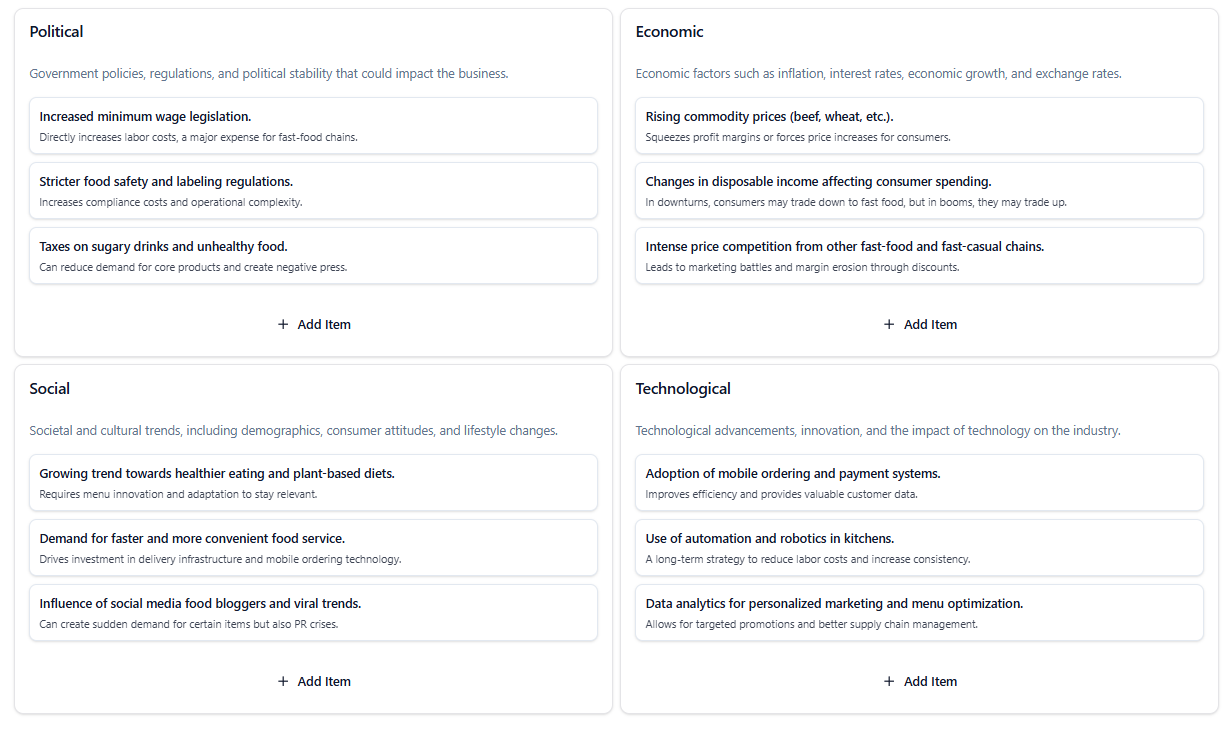
This PEST analysis explores the external forces shaping the strategy of a large international fast-food chain. It highlights how evolving policies, shifting consumer preferences, and technological advancements continuously redefine operational efficiency and brand positioning.
- Regulations Drive Operational Change: Minimum wage hikes, stricter food safety laws, and health-related taxes are increasing compliance costs. Proactive adaptation through automation and menu diversification is essential to maintain profitability.
- Economic Cycles Influence Demand: Commodity price volatility and consumer income shifts affect pricing flexibility. During downturns, value menus and affordability become strong competitive levers.
- Health and Lifestyle Shifts: Growing consumer demand for healthier and plant-based options pushes innovation. Social media influence also amplifies brand perception, making responsiveness to online trends critical.
- Technology as a Differentiator: Investments in mobile apps, digital payments, and kitchen automation enhance speed, accuracy, and personalization—key factors in maintaining customer loyalty and cost efficiency.
The fast-food chain’s long-term success depends on balancing regulatory compliance with innovation. By leveraging technology to offset labor costs, diversifying the menu to align with health trends, and strengthening brand engagement through digital channels, the company can remain resilient in a volatile and highly competitive environment.