A goal-setting framework that helps you define ambitious objectives and track measurable results to drive clarity, alignment, and high-impact execution.
See how the OKR framework applies across industries to strengthen focus, accountability, and performance.
Digital Experience & Design
Website Redesign
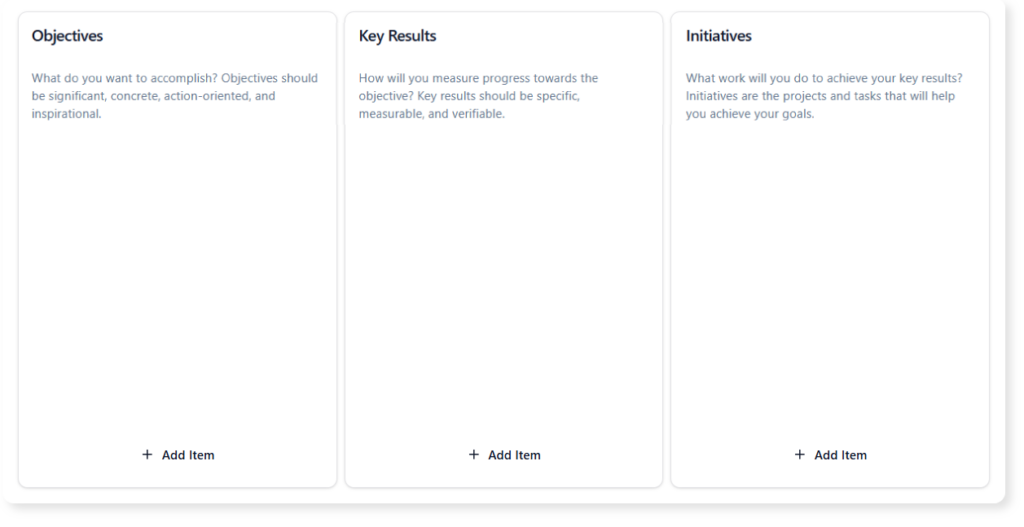
A sample OKR outlining how a digital team can refresh a website’s structure, visuals, and content to create a smoother experience and increase overall engagement.
Our AI-powered tool helps you create focused, measurable OKRs—ensuring ambition is balanced with clarity, alignment, and real-world impact.
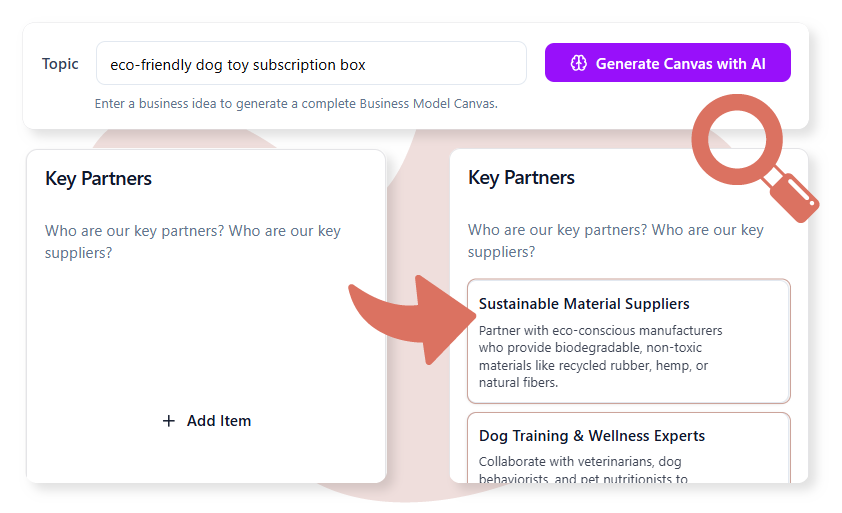
AI Canvas Generation
Planning a new initiative or quarterly goals? Enter a prompt like “OKRs for Tech Innovators Inc.”, and the AI instantly generates strategic objectives along with measurable, actionable key results.
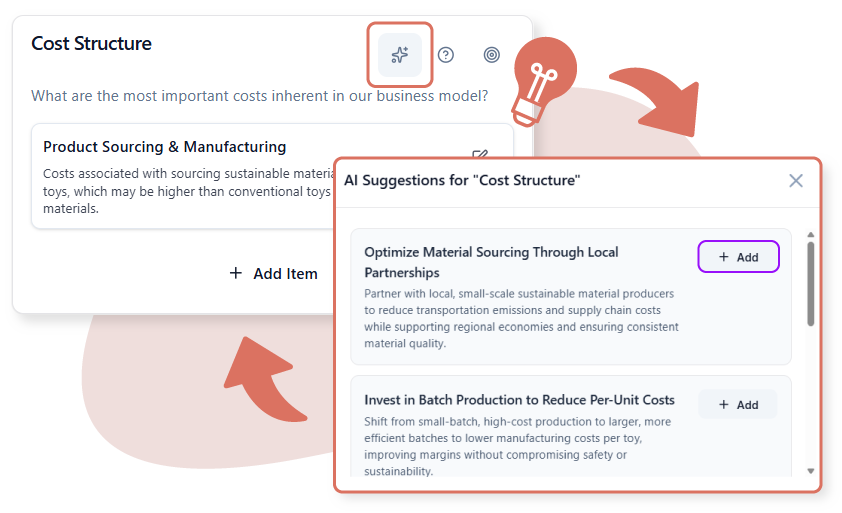
AI-Assisted Ideation
Not sure how to phrase a clear objective or define measurable results? The AI analyzes context, industry benchmarks, and success indicators to help you craft precise, high-value OKRs.
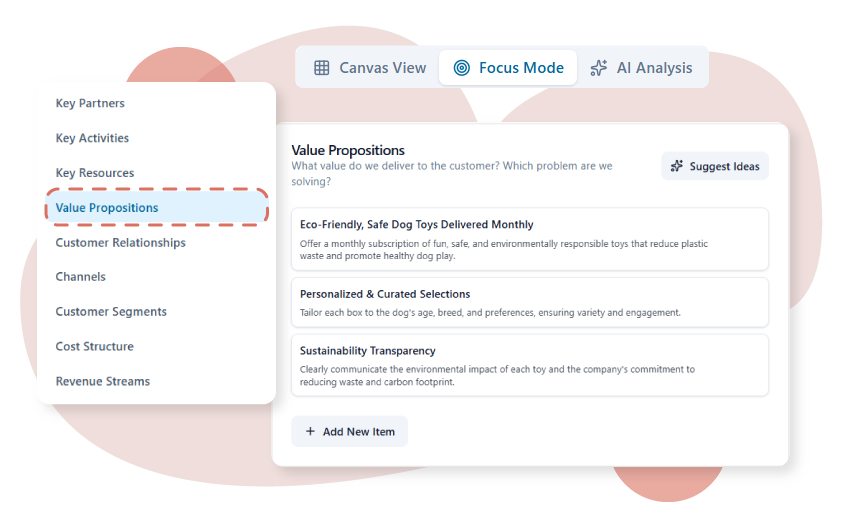
Deep Dive & Organize
Focus on specific objectives to break them down into supporting key results. Add notes, group related metrics, and attach insights to ensure progress is truly trackable.
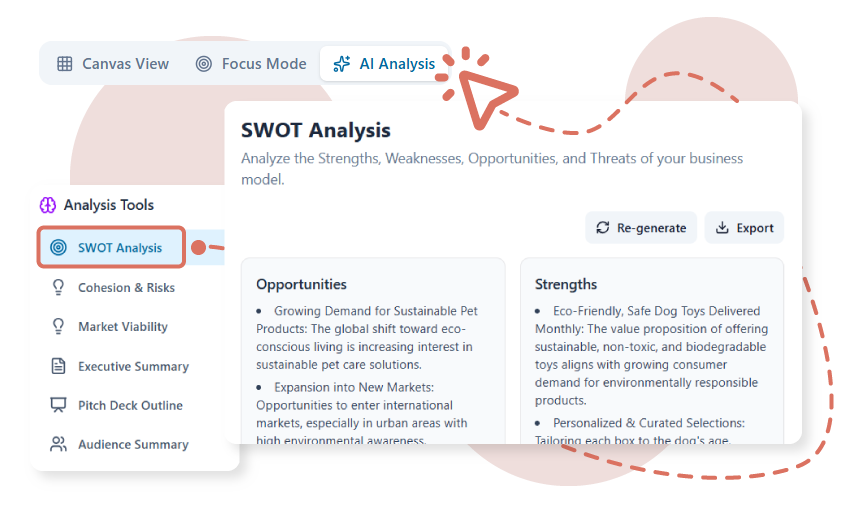
Strategic AI Analysis
Go beyond drafting OKRs. The system identifies missing metrics, evaluates alignment across teams, and highlights where objectives may be too broad, unrealistic, or insufficiently measurable.
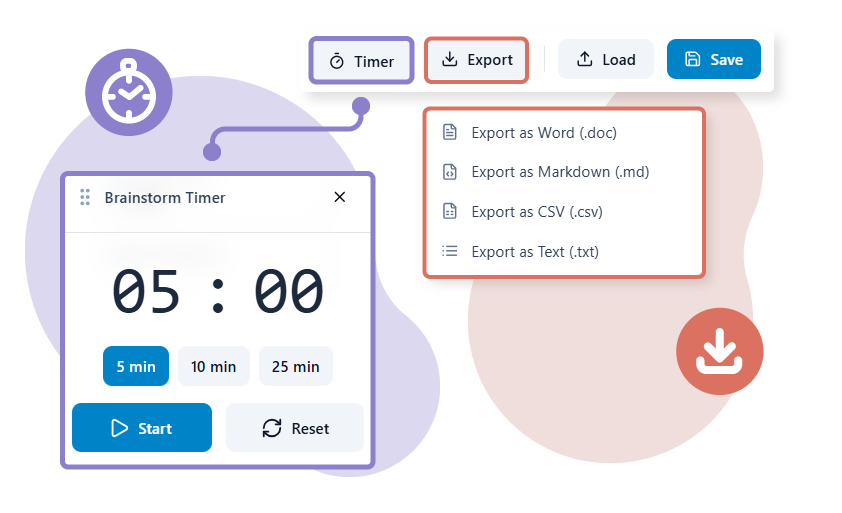
Collaborate & Export
Collaborate with your team in real time to finalize OKRs, then export your complete OKR set—with AI insights—into polished planning documents for reviews, check-ins, and executive presentations.
Frequently Asked Questions
1. What is the OKR framework used for?
OKRs help organizations set clear objectives and define measurable results to ensure focus, alignment, and consistent progress across teams.
2. How is OKR different from KPI?
OKRs define what you aim to achieve and how you measure success, while KPIs track ongoing performance metrics. OKRs are goal-driven; KPIs are performance-driven.
3. When should I use OKRs?
Use OKRs when setting quarterly or annual goals, launching major initiatives, improving team alignment, or driving organizational focus on measurable outcomes.
4. How does AI improve the OKR process?
The AI suggests clearer objectives, generates measurable key results, identifies alignment gaps, and ensures each OKR is specific, actionable, and tied to meaningful outcomes.